


- Share


Field House
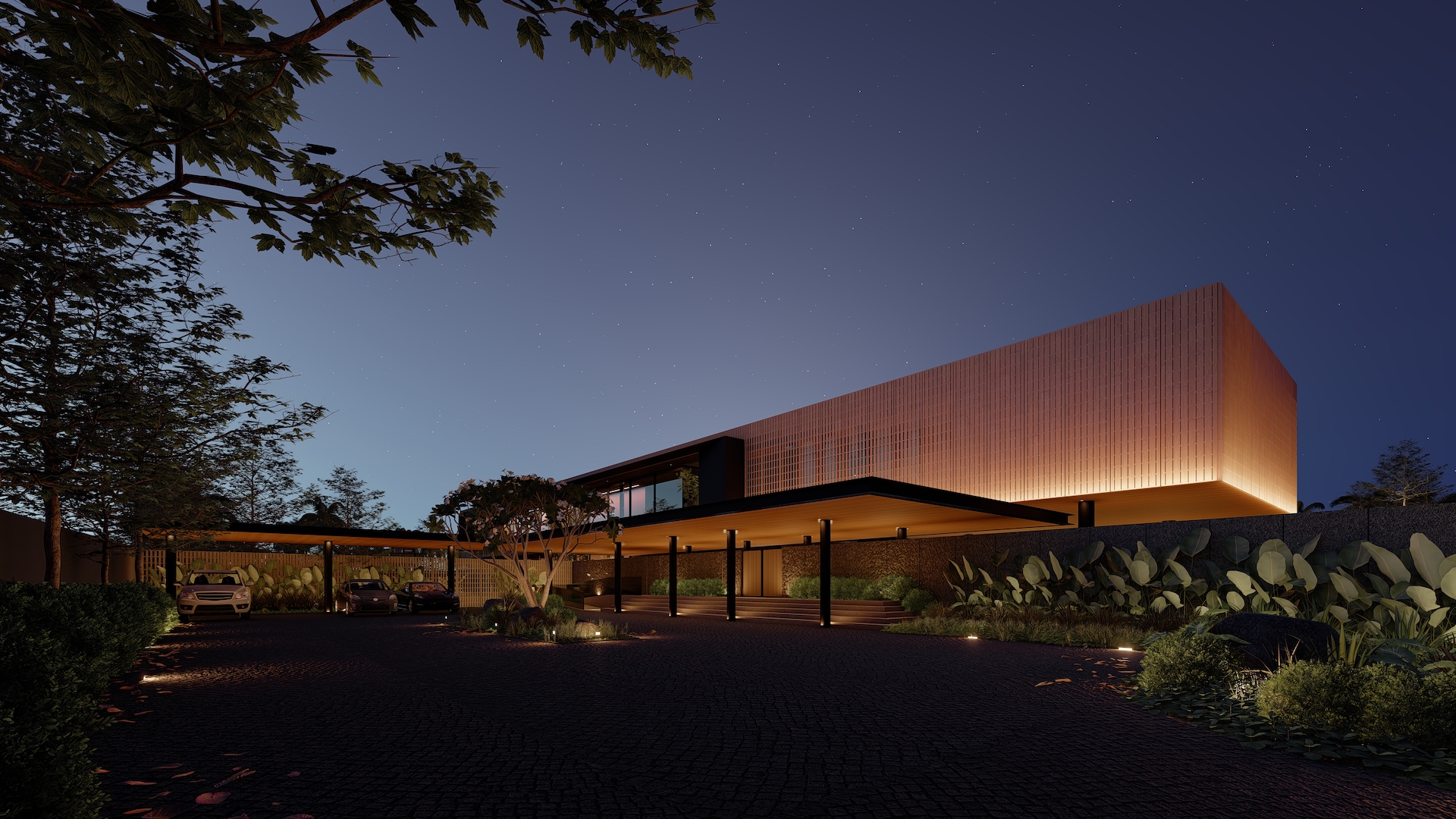
Philippines, 2020Field House is an expansive private residence set within the agricultural plains in a Philippine province, widely recognized for its vast fields and deep-rooted agrarian identity. Occupying a 7,000-square-meter site, the development is composed of a main house supported by several auxiliary structures, together forming a self-contained domestic landscape. Conceived not only as a family home, the project functions as a place of gathering, retreat, and refuge for close family and friends—one that embraces its rural context rather than retreating from it.
Location \ Philippines
Building Area \ 3,500sqm
Program \ Residential
Status \ Completed
A Home Among the Fields
Sited directly amidst open farmland, the house exists in constant dialogue with the fields that surround it. The uninterrupted horizon and the slow rhythm of agricultural life inform the project’s atmosphere and spatial intent. Here, freedom is not defined by excess or isolation, but by openness—freedom of movement, of being, and of self-expression within nature.
The fields provide a quiet sense of security and grounding. With no immediate urban density to contend with, the house opens itself confidently to its surroundings, allowing nature to become an extension of daily living. The architecture does not impose itself on the land; instead, it settles into it, finding strength in its simplicity and scale.
Facade
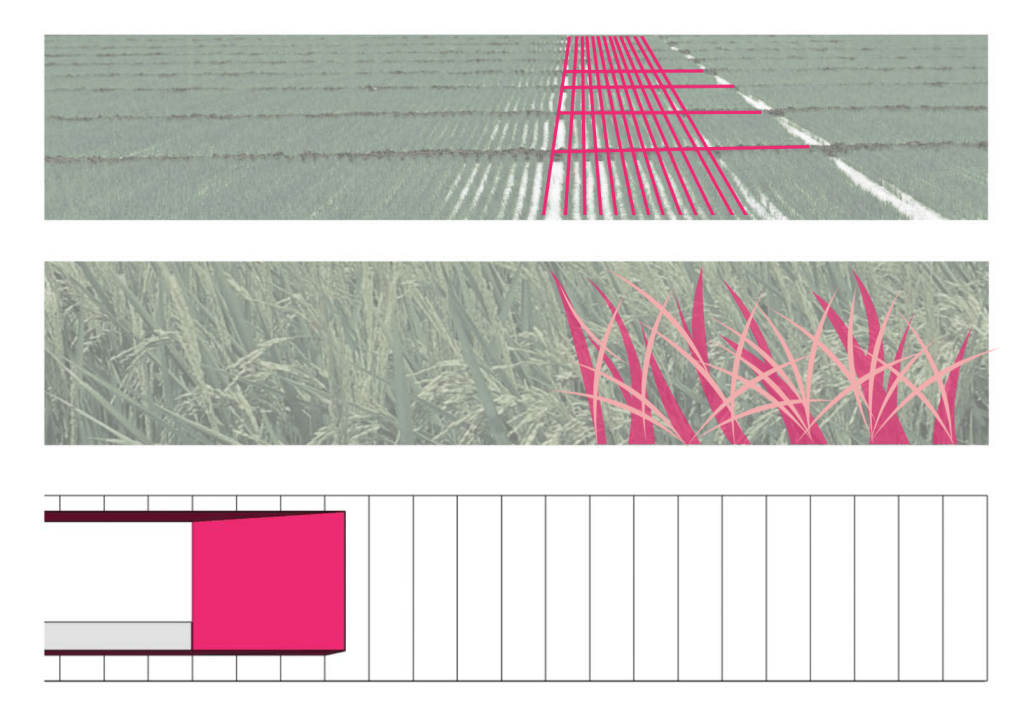
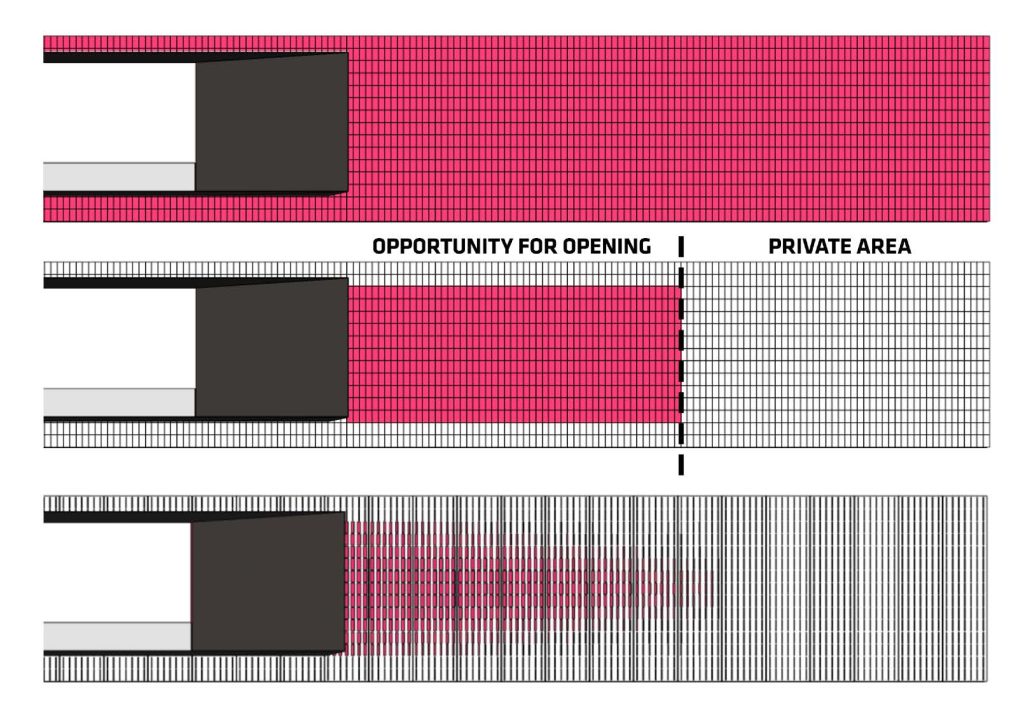
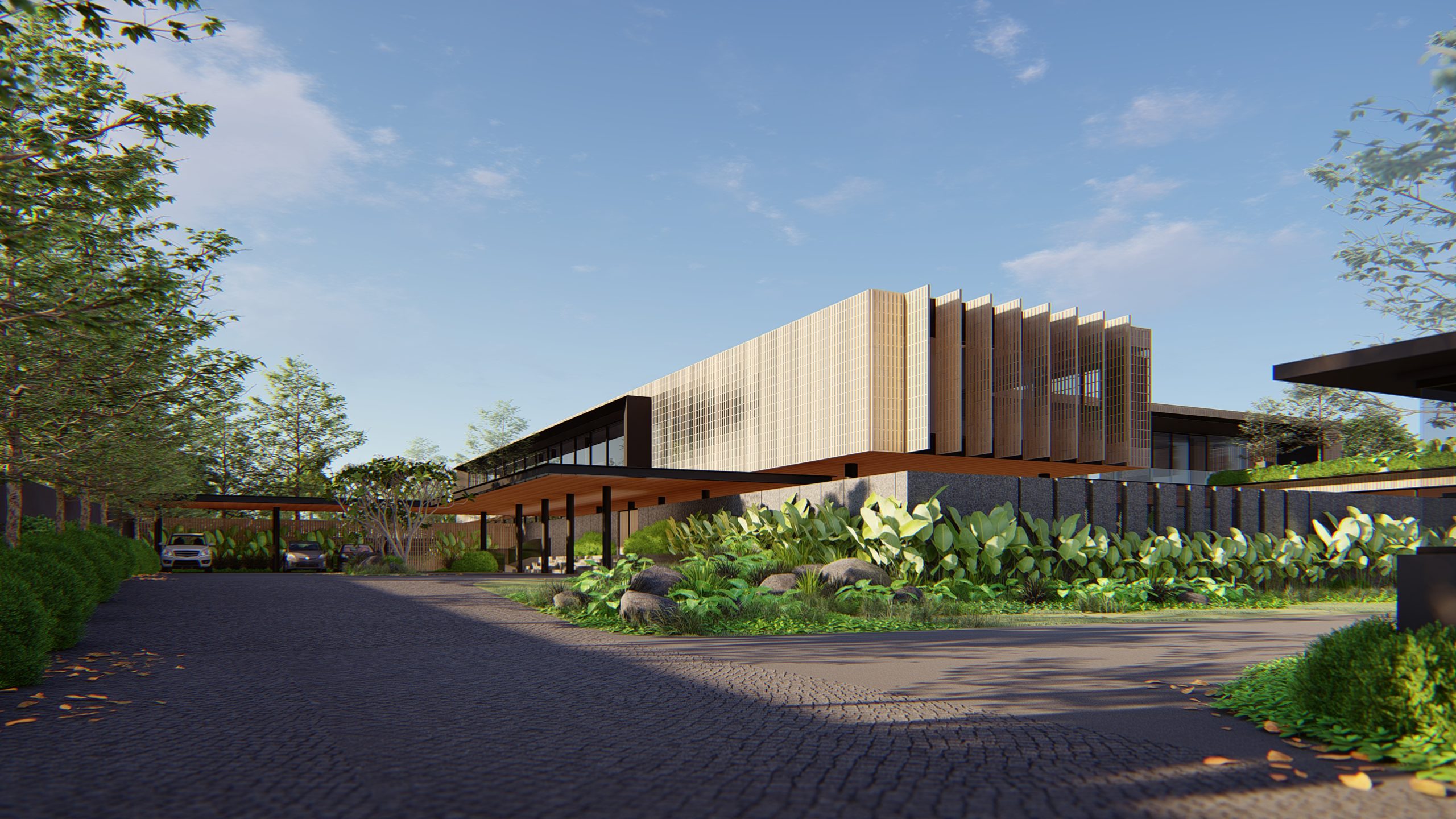
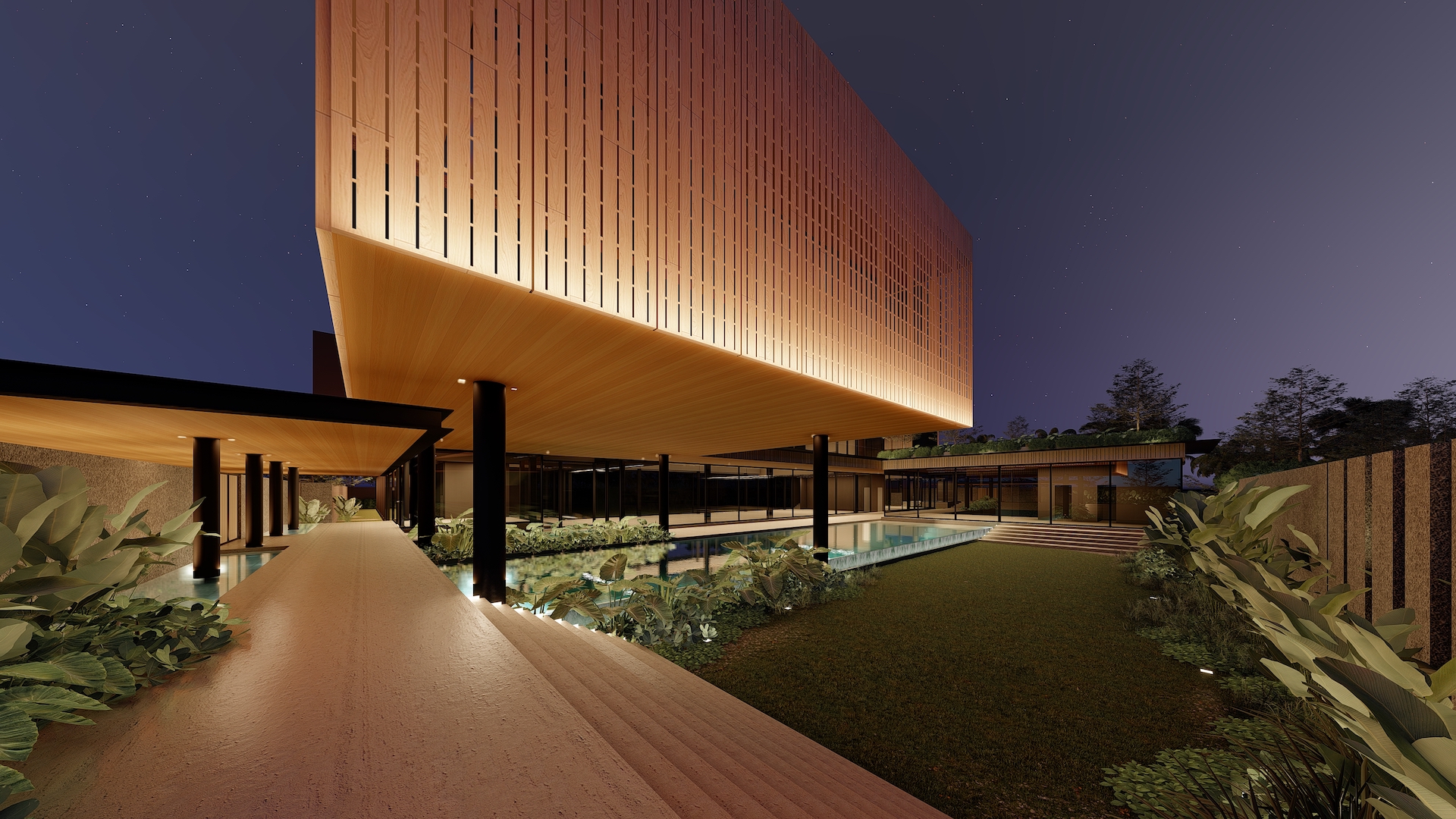
To protect the upper levels of the private spaces, a layer of wood sun shading screens surrounds the balconies and rooms. Some of the panels open while other parts of the screens are fixed. The patterns of the screen are derived from the geometry of rice paddies and lines of rice stalks patterns. The perforations increase in size to allow more visibility to the outside, while the size diminishes in areas that need utmost privacy. As the interior spaces reach out to its environs, the house actively engages with its surrounding landscape.
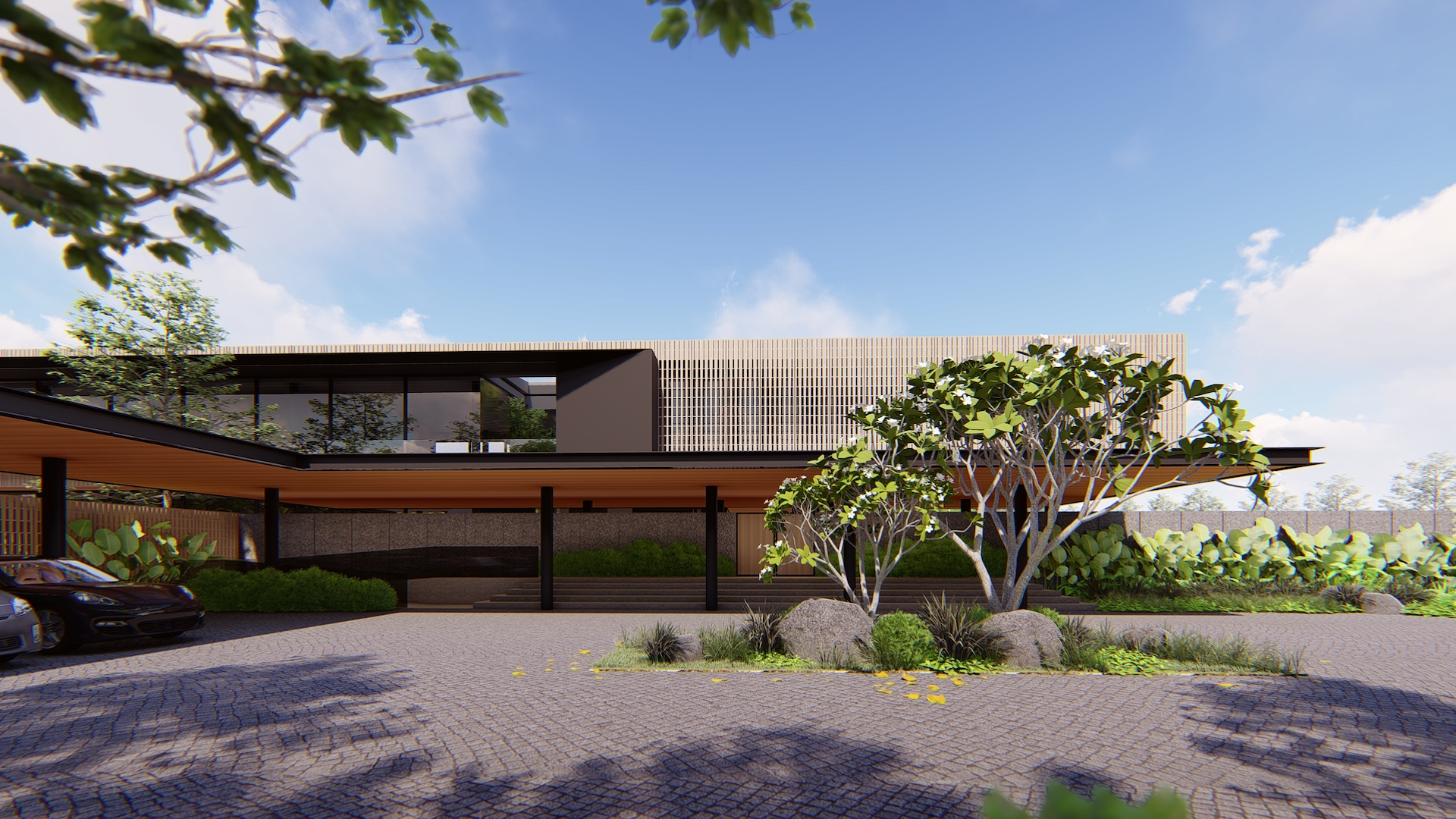
Porosity in Nature
Porosity became a central design principle, mediating the relationship between inside and outside, as well as between common and private spaces. Inspired by natural patterns, porosity is expressed in varying degrees throughout the house—responding to both spatial requirements and environmental conditions.
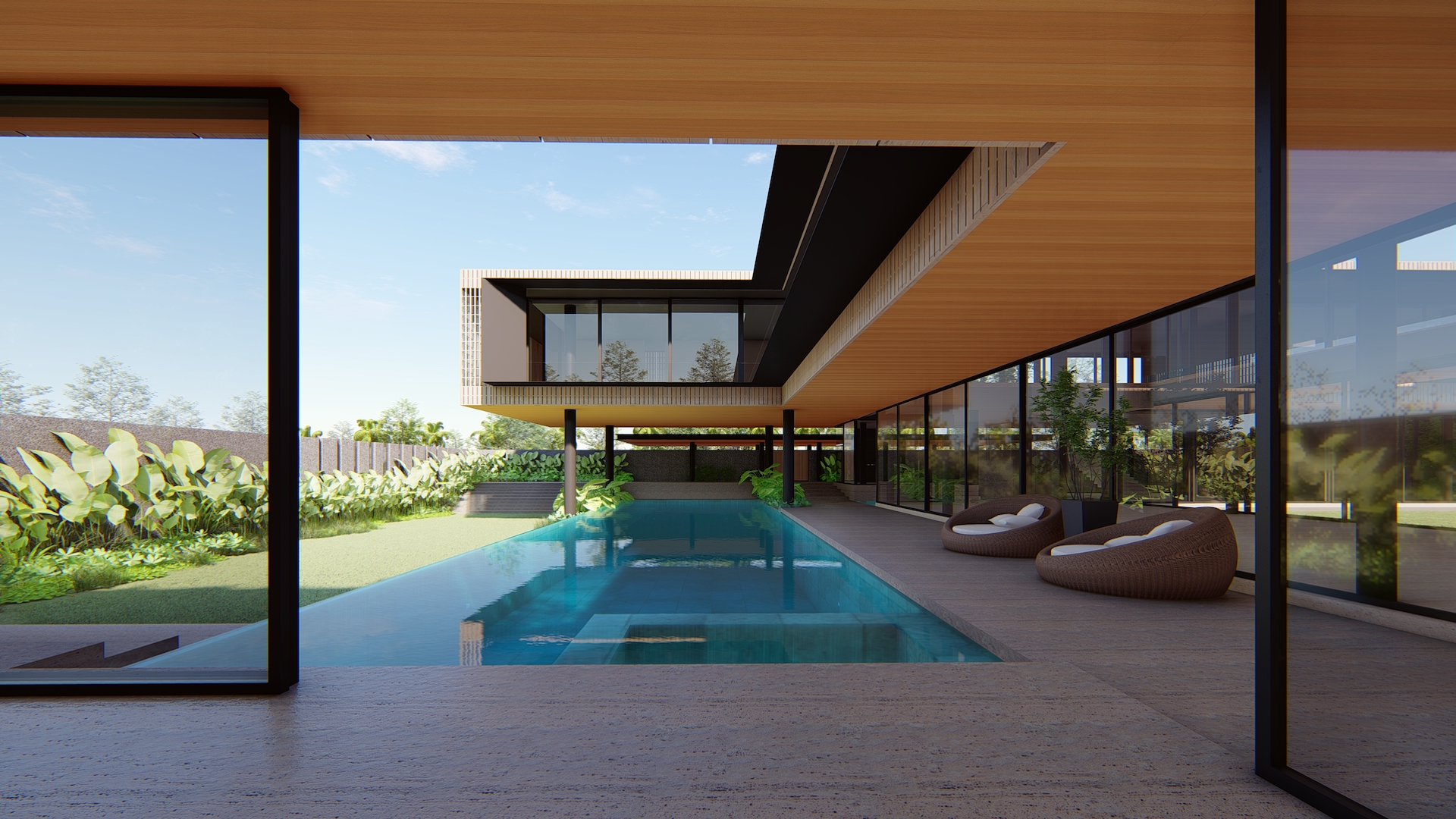
Openings are strategically positioned in alignment with sun paths and prevailing wind directions, allowing the structure to work with the climate rather than against it. Large apertures frame views while promoting cross-ventilation, reducing reliance on artificial cooling and enhancing thermal comfort.
Spaces intended for gathering are arranged with both physical and visual connectivity in mind. Central passageways, aligned openings, and long sightlines create a sense of continuity, allowing occupants to remain visually connected even as they move through different zones of the house.
To further refine environmental performance, each space was carefully studied to determine its need for daylight and airflow. This analysis informed the placement of operable panels, which allow users to modulate light, wind, and privacy. These panels evolved into a custom perforation pattern, balancing shading, ventilation, and visual permeability while adding a layer of architectural texture to the façade.
Interiors
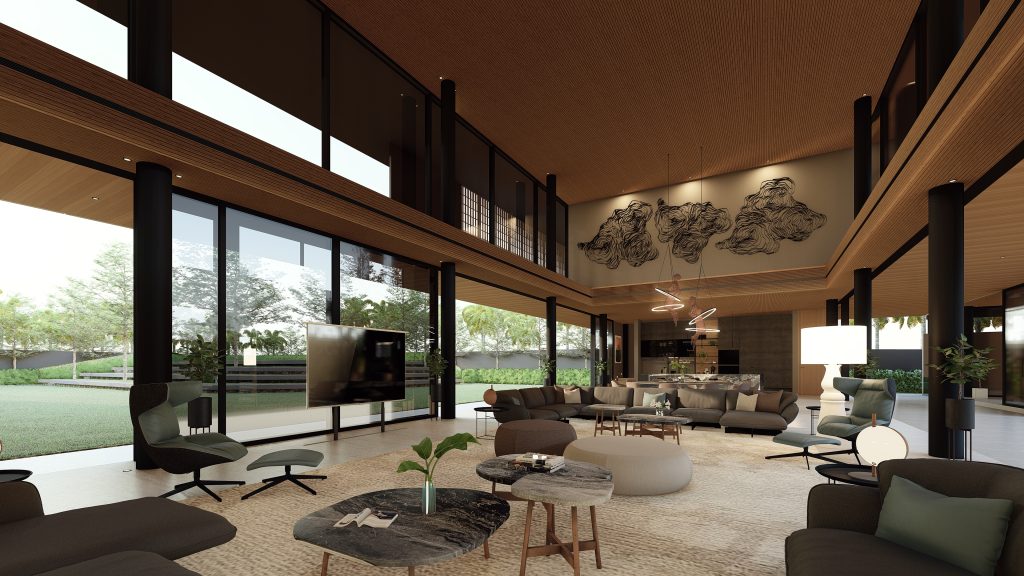
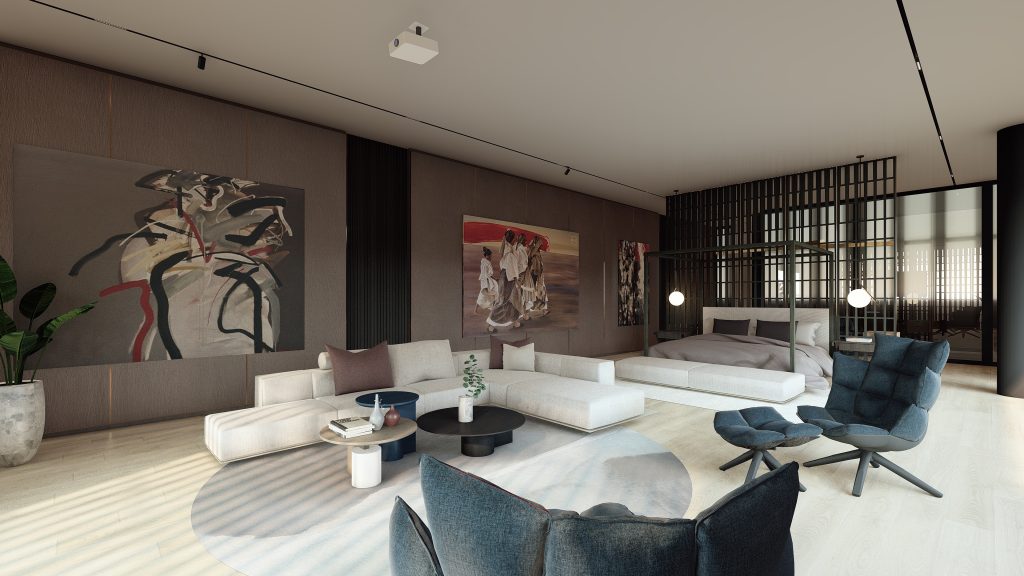
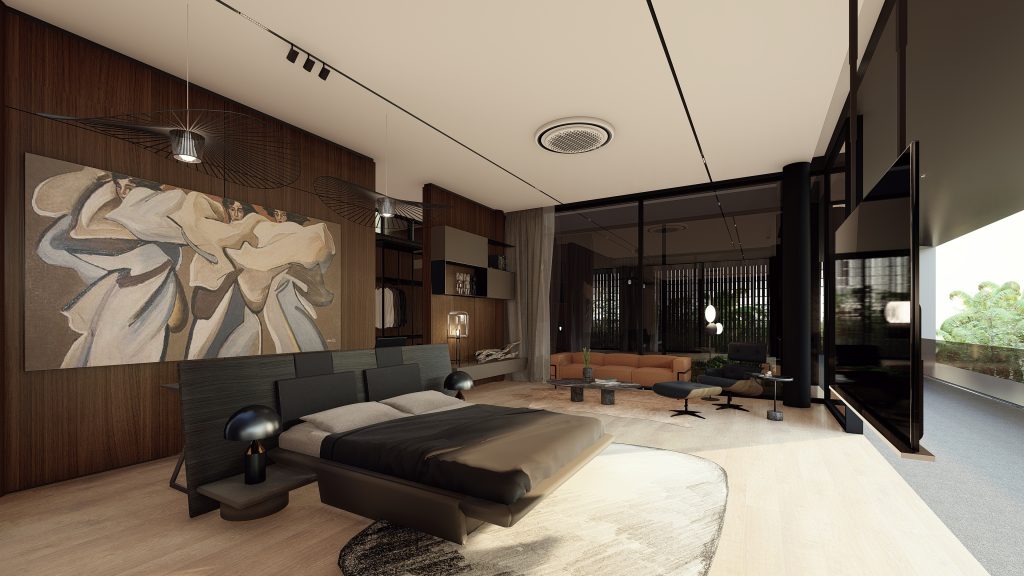
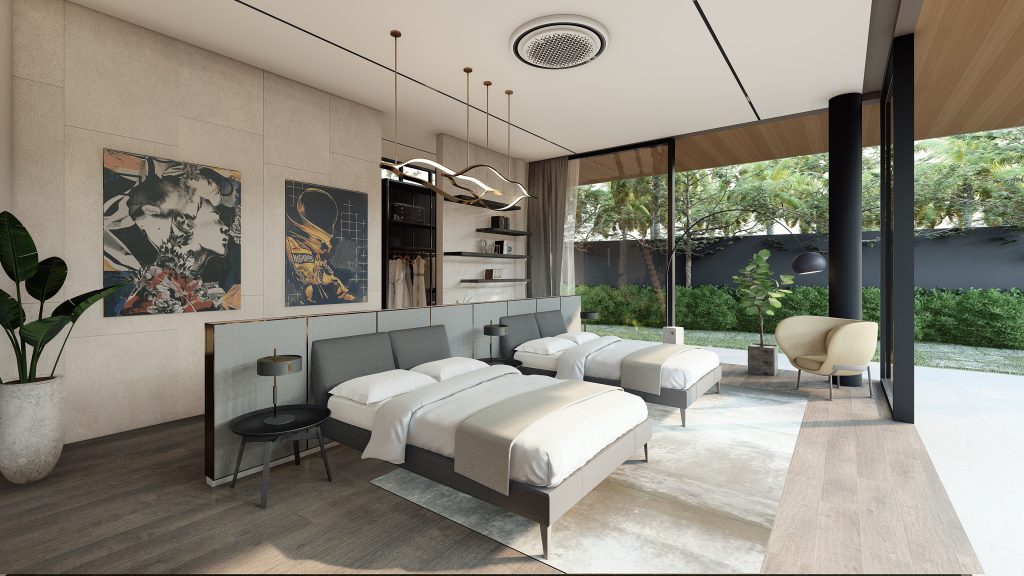
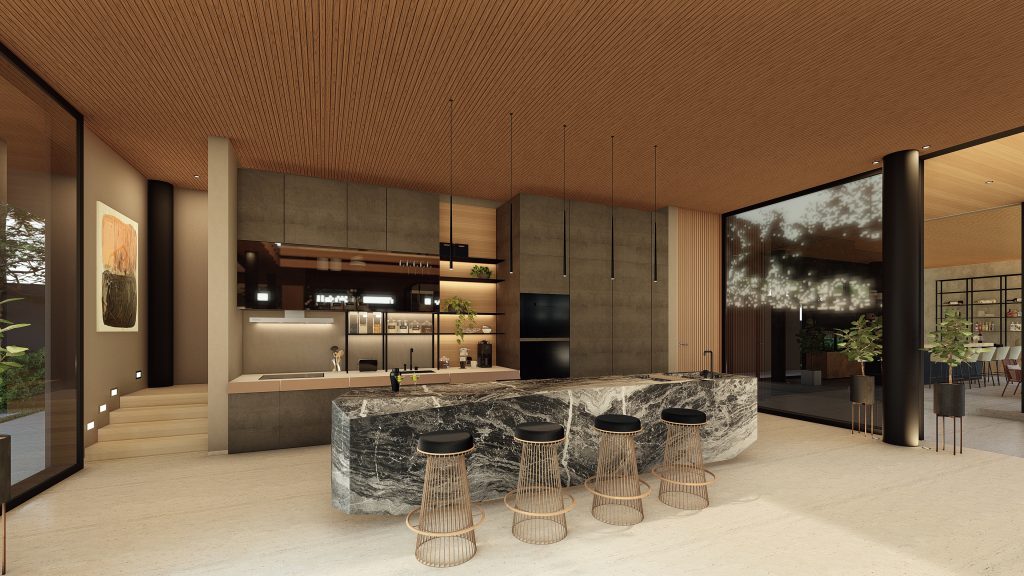
The interior environment was approached with the same sensitivity to context. Rather than treating interiors as enclosed rooms, each space is oriented toward the surrounding landscape, with the fields and curated greenery acting as the primary backdrop. Materials, finishes, and proportions are kept restrained, allowing light, shadow, and view to take precedence.
The result is an interior that feels calm and grounded—one that constantly reminds its occupants of where they are. Nature is never distant; it is always present, framed, filtered, and felt.
Synthesis
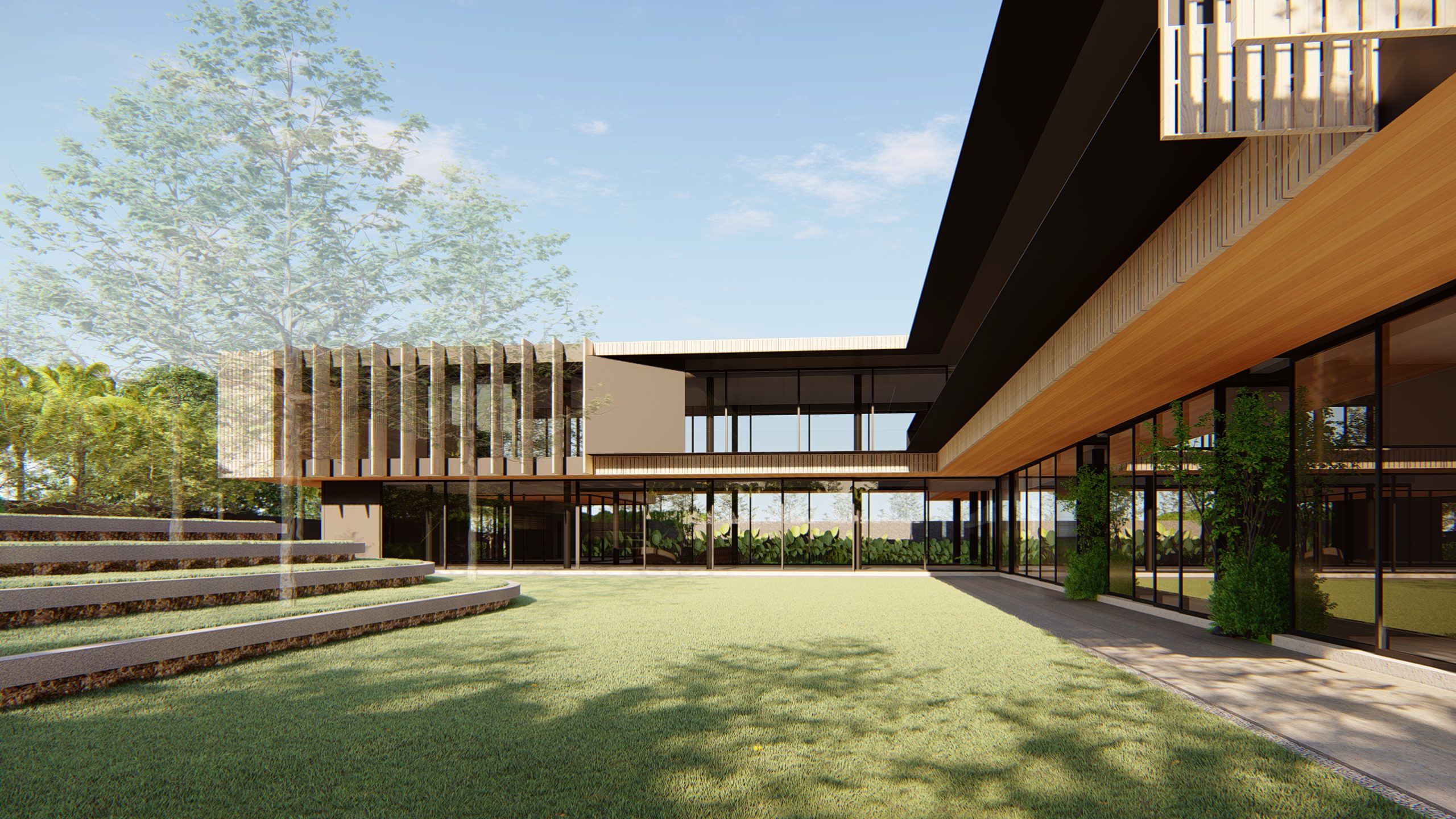
Field House ultimately serves as a refuge within openness—a home that offers comfort without severing ties to its environment. Rooted in the fields of Isabela, it stands as a place where family gathers, life slows down, and architecture becomes a quiet mediator between people and the land they inhabit.
Project Team
Architecture / Interiors \
Jason Buensalido, Jerome Bautista, Reynald Pascua, Patricia Lomeda, Nikko Bumanglag, Kazia Pacia
Collaborators
Structural \ DCH Reyes Structural Design Consultancy
MEPF \ RS Gutierrez
Landscape Architecture \ RPG Corporation


