


- Share


CIIT Glitch Tower
Quezon City, Metro Manila, 2023The second tower for CIIT College of Arts and Technology was conceived as an 11-storey vertical campus that embraces mistakes as part of learning and gives them architectural form. Moving beyond the language of its predecessor, the project sought to speak more directly to the world of technology—not through the usual image of tech as seamless, sleek, and optimized, but through its more unstable side: interference, distortion, and the strange beauty of things going slightly haywire.
For a school rooted in both art and technology, this became a fitting premise. Learning rarely moves in a straight line; it unfolds through testing, iteration, missteps, and discovery. The glitch is therefore explored not simply as a visual motif, but as a way of thinking about experimentation, creative practice, and the productive role of mistakes in learning.
Client \ CIIT College of Arts and Technology
Location \ Diliman, Quezon City, Metro Manila, Philippines
Building Area \ 4158 sqm
Program \ School
Status \ Construction
The Problem
What language should a second tower speak?
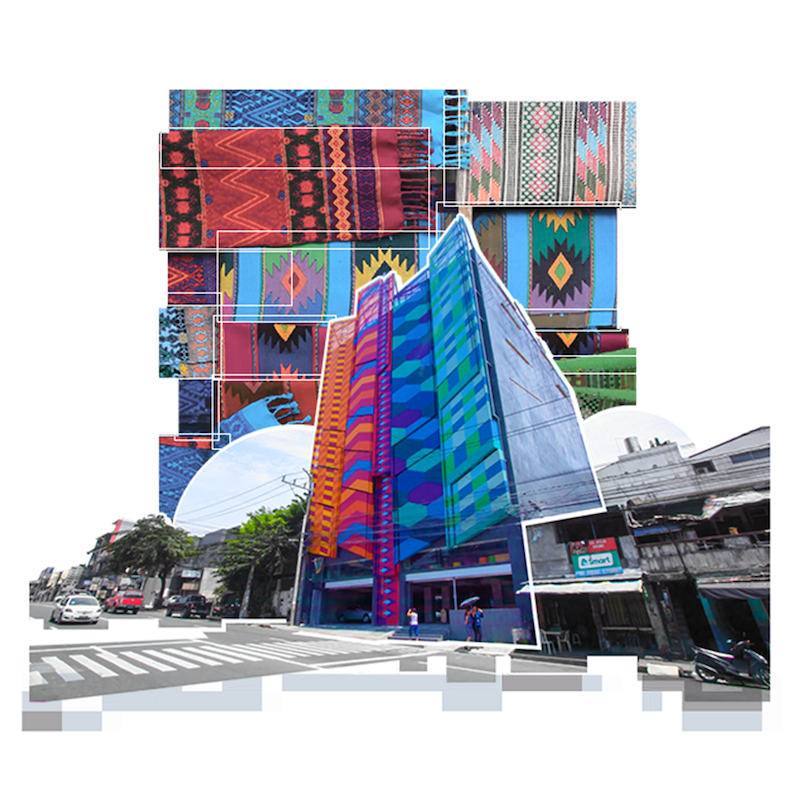
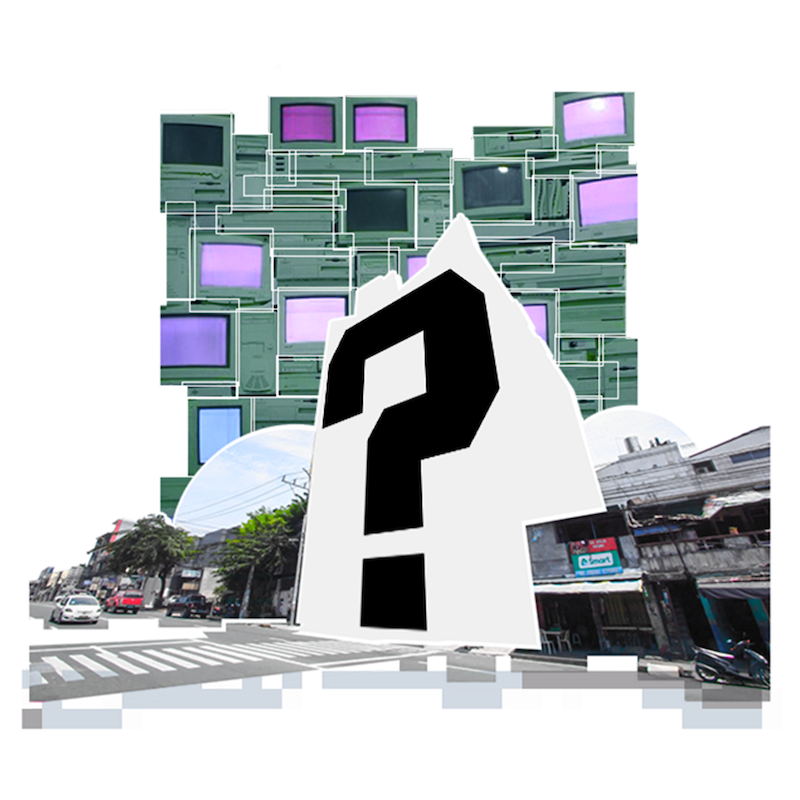
Designing the second tower meant confronting this basic question. If Tower 1 established a design language rooted in art, Tower 2 became an opportunity to foreground technology with equal clarity. The challenge was not just to make a companion building, but to find a new architectural language that could stand alongside the first while asserting its own identity. This question became more specific through the reading of the site.
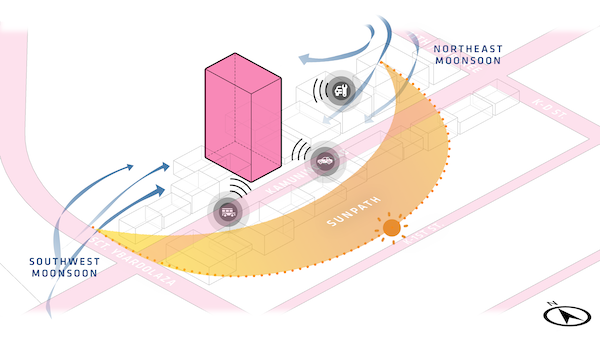
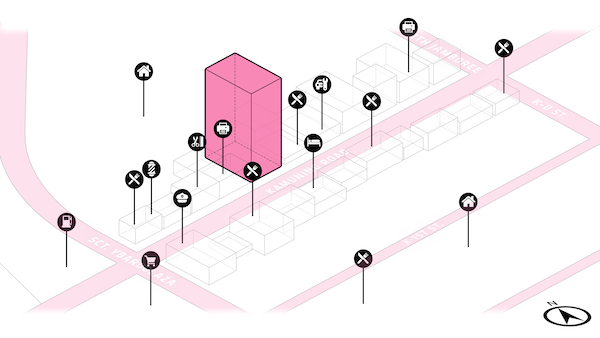
Located on Kamuning Road in Diliman, Quezon City, the site places the tower within a dense urban corridor shaped by movement, visibility, and everyday mixed-use activity. Its prominent frontage gives the project a strong public presence and direct access, but also exposes it to traffic noise and the intensity of the street. Environmental conditions were equally important: direct solar exposure, especially from the hotter afternoon sun, and seasonal airflow from both the southwest and northeast monsoons. These forces made the site analysis central to the design, informing how the tower balances openness and exposure with shading, buffering, comfort, and a more breathable campus environment.
Mistakes as Method

From this, the search began for a design language that addresses the site conditions while making it feel technological without becoming generic—something more grounded in how technology actually behaves.
Like art and nature, which informed the design language of Tower 1, technology also operates through underlying logic: patterns, systems, and rules that can be explored, tested, and transformed. In contemporary practice, this logic often takes form through code, scripting, and generative design, where outcomes emerge not only from intention, but from the behavior of the system itself.
Within that world, mistakes are everywhere.
Recreating The Glitch
As we looked at glitches across screens, broken media, corrupted files, and computational experiments, we found that they were not as random as they first appeared. Across different examples, certain visual behaviors kept recurring, suggesting that even distortion had its own internal logic.
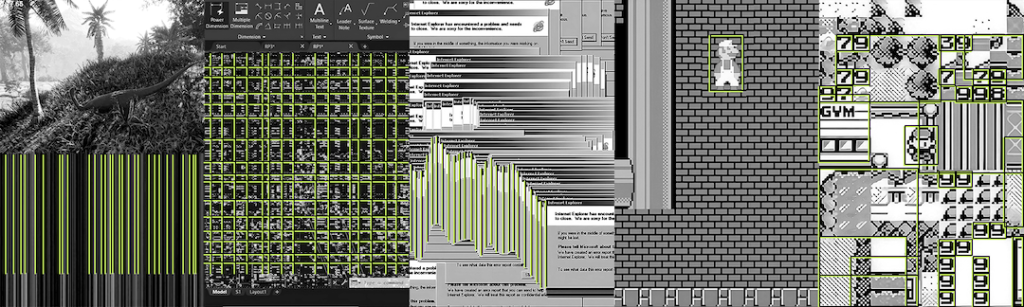
These behaviors were distilled into a set of components: unidirectional lines, criss-crossing lines, cascading lines, floating lines, and overlapping lines. Together, they formed a vocabulary that allowed us to move from observation into reconstruction.
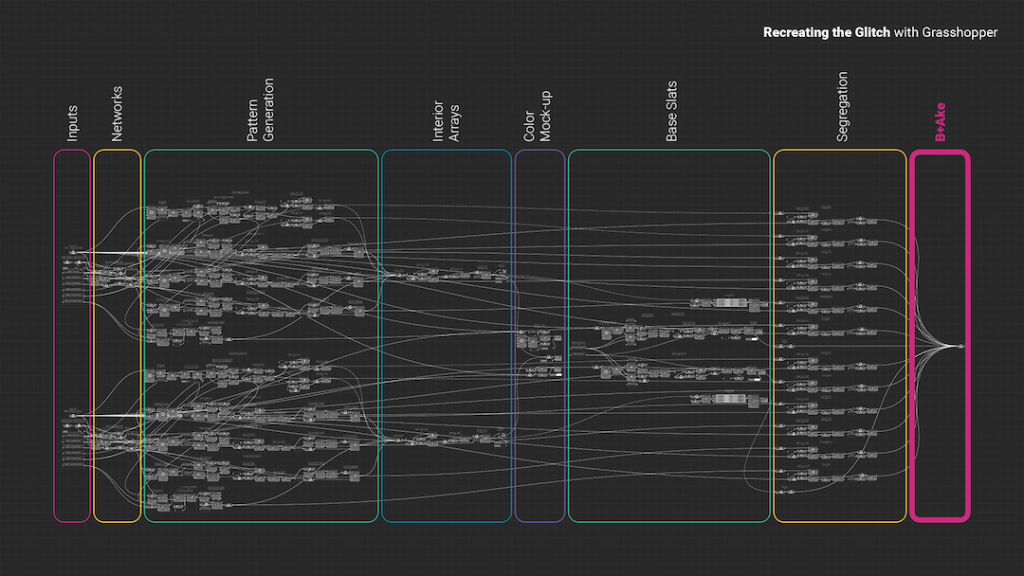
The next step was to reverse-engineer this language into a parametric process. Rather than replicate specific glitch images, we translated their behaviors into code. Surfaces of the façade were subdivided into different networks, nodes were identified and connected, and particular glitch behaviors were assigned and varied across each field. What emerged was not a literal copy of visual noise, but a system capable of producing controlled irregularity.
The Facade
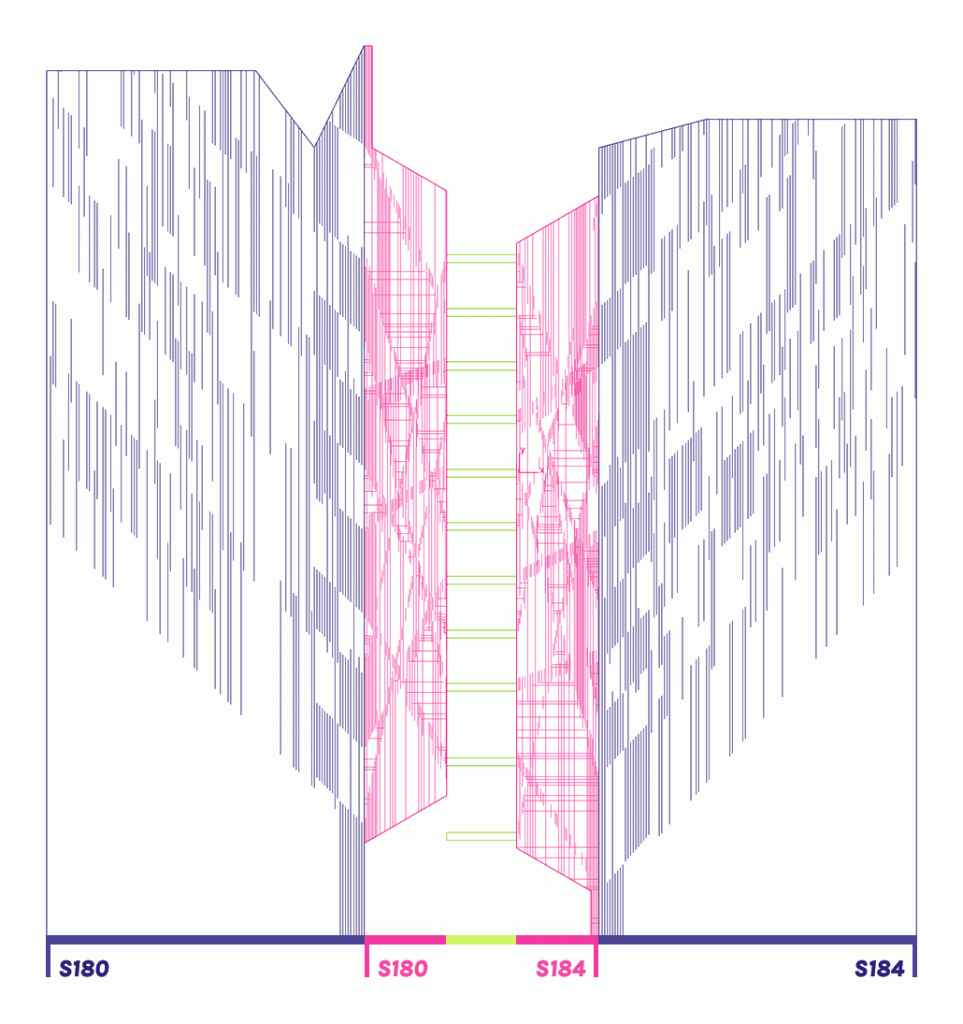
The design process from this point became curatorial.
Multiple iterations were generated and reviewed, with each study offering a different balance of order, density, interruption, and flow. The task was not simply to pick the most visually striking option, but to identify which iterations best translated the project’s central idea into something architectural—something that could hold together as both image and enclosure.
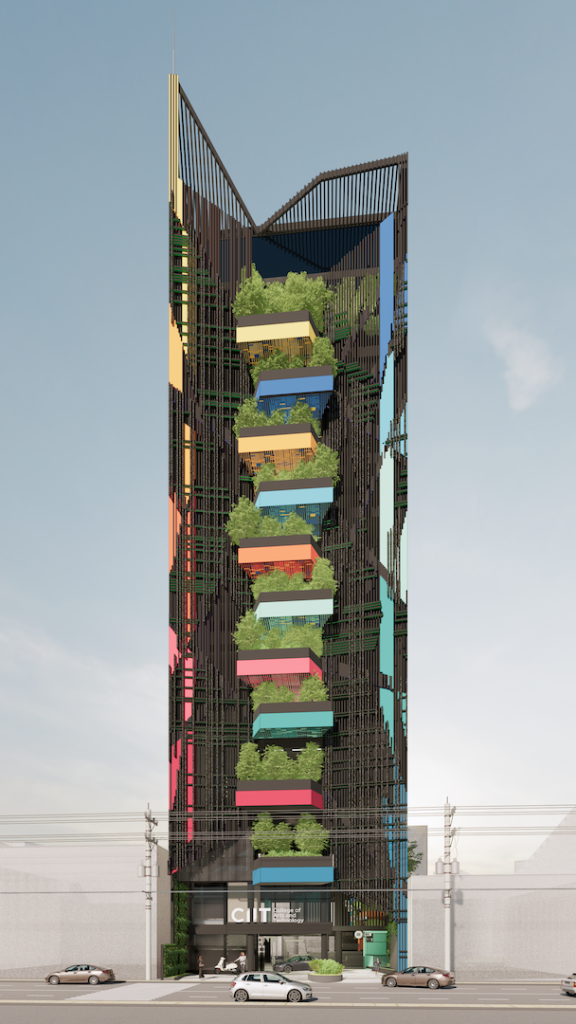
Through this process of comparison and selection, the glitch studies gradually took on direction and formal clarity. The resulting façade gave the second tower a distinct identity: more fractured and layered than its predecessor, but still guided by an underlying system.
But the façade does more than carry the concept visually. Its layered composition helps moderate sunlight, filter glare, and add depth to the building envelope, allowing the tower to shift in character throughout the day as light moves across its surface. At the scale of the user, it frames views, creates moments of partial transparency, and gives the exterior a sense of thickness rather than flatness. At the scale of the city, it allows the tower to register as a dynamic presence—readable both as a coherent whole and as a field of finer visual events.
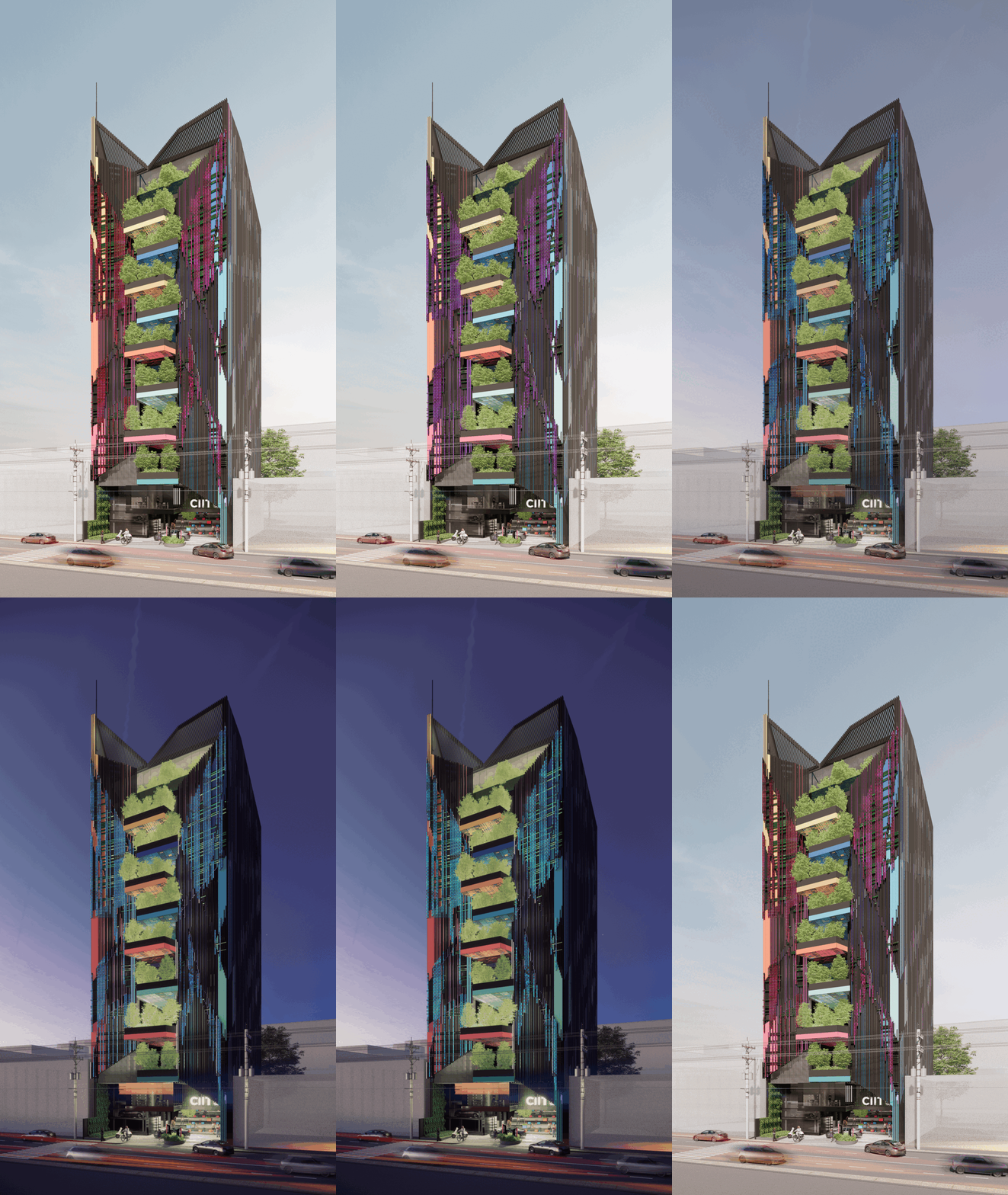
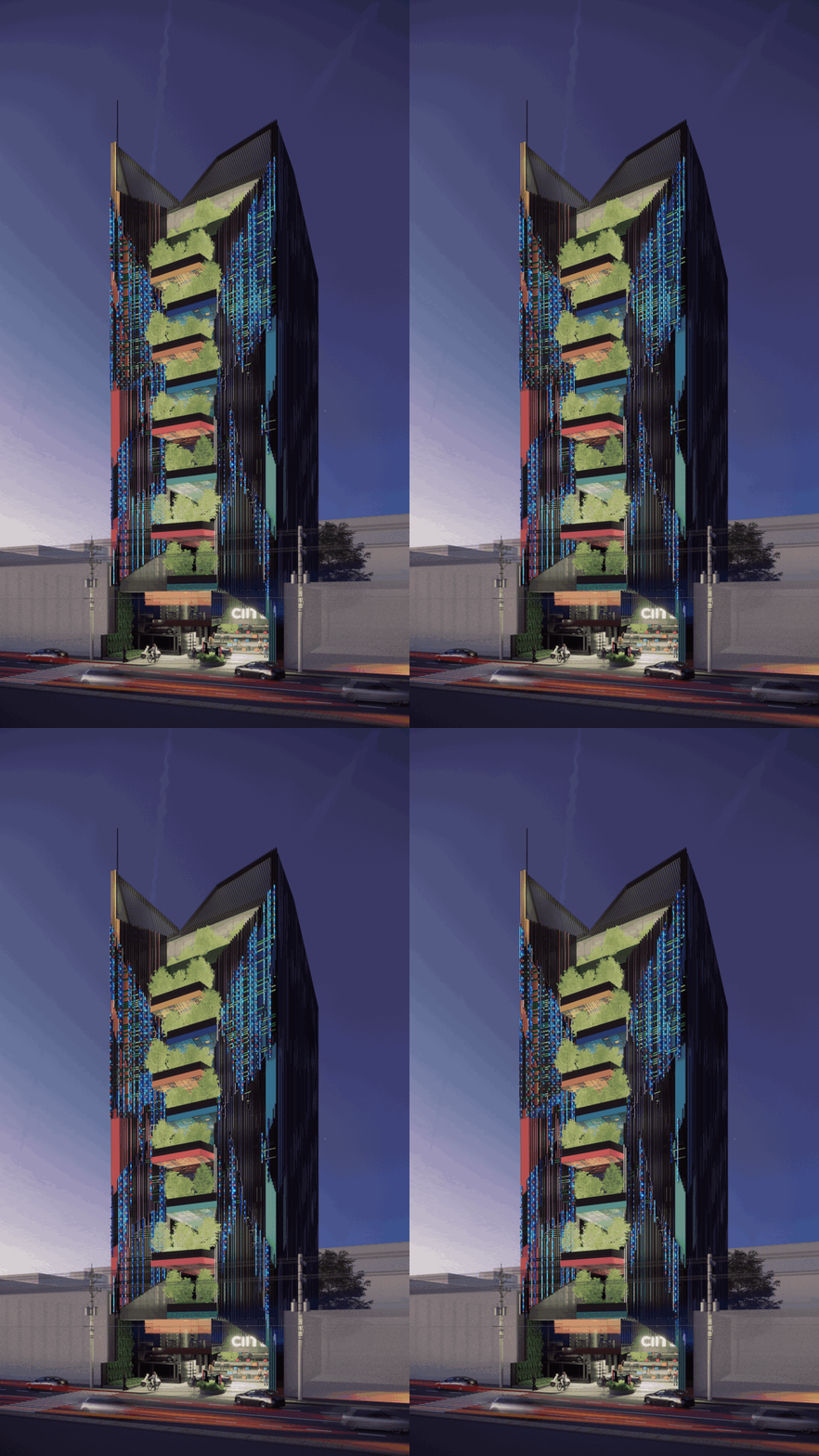
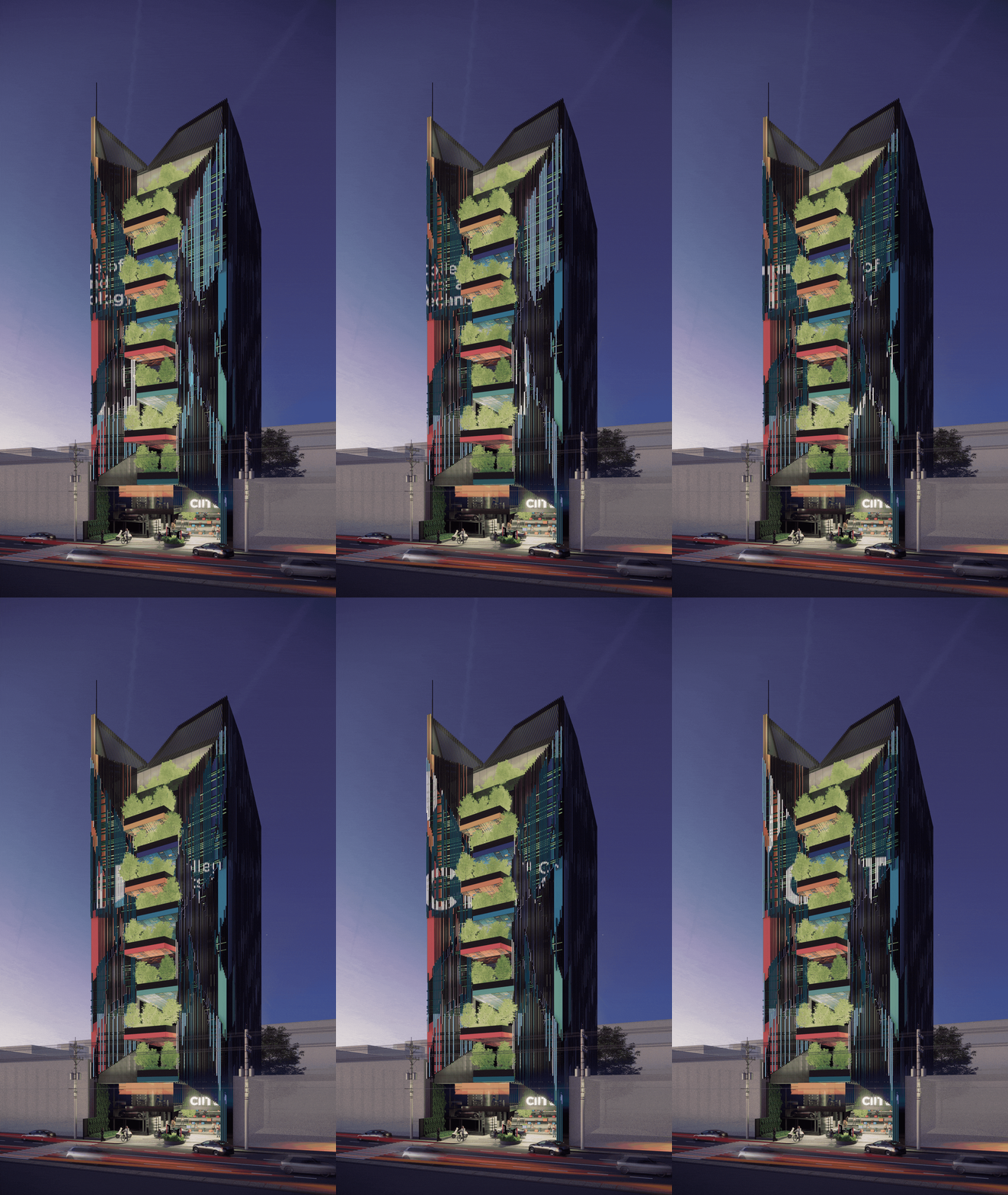
The vertical linework also opens up the possibility of a digitally active facade. With integrated LED elements, parts of the envelope can shift according to events, announcements, showcases, or campaigns—displaying simple colors, graphics, moving images, or video. This allows the building to operate not just as an icon, but as a living interface for the school. Rather than functioning as a fixed wrapper, the façade becomes both expressive and operative: an environmental filter, an identity marker, and a platform for display.
From there, the architectural language of the exterior opens toward the experience of the school within.
The Learning Environment
That same idea of learning through movement, exchange, and discovery continues beyond the façade.
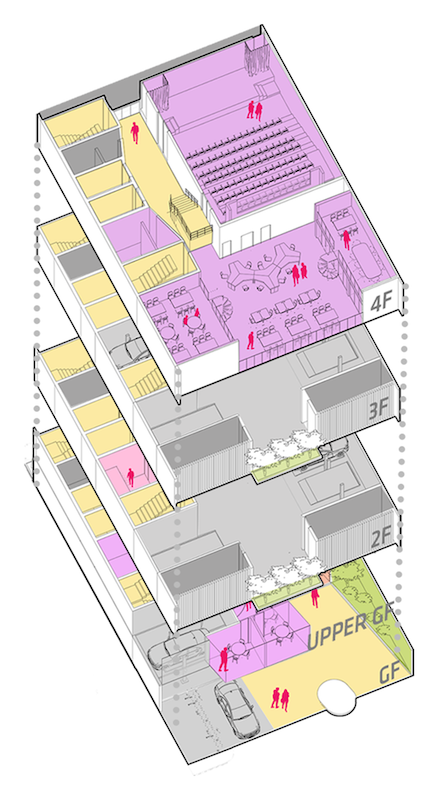
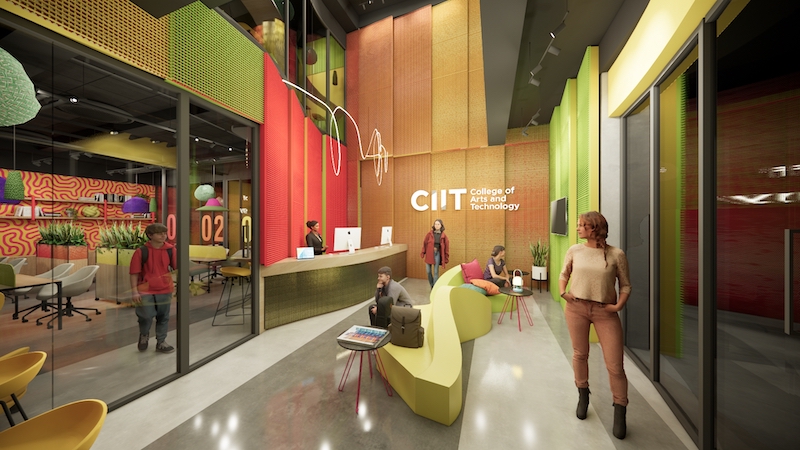
From the Lower to Upper Ground Plaza, the base of the tower is imagined as an open and active social field—less a point of entry than a shared threshold where campus life can spill outward and begin before one even reaches the classroom. This more public zone helps connect the school to the city while giving students a space for informal meetings, events, waiting, and everyday occupation.
As the building rises, this culture of interaction is first anchored by the shared spaces from the Lower Ground Floor to the Upper Ground Floor. These plaza levels create an active social base for the school—supporting movement, waiting, meeting, and informal exchange throughout the day. The café strengthens this by providing a casual space for students and faculty to gather outside the classroom.
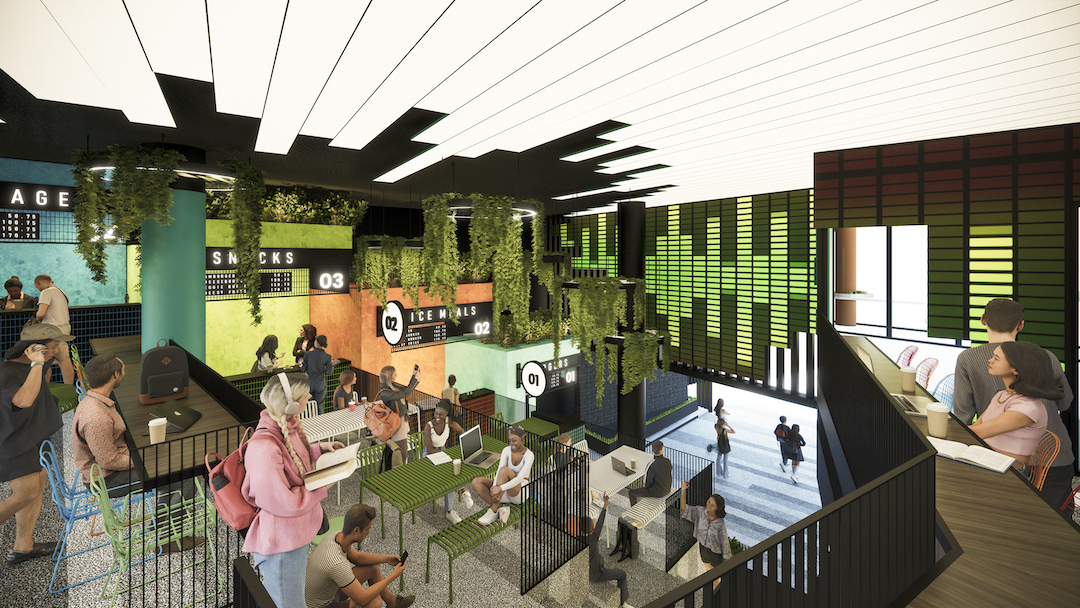
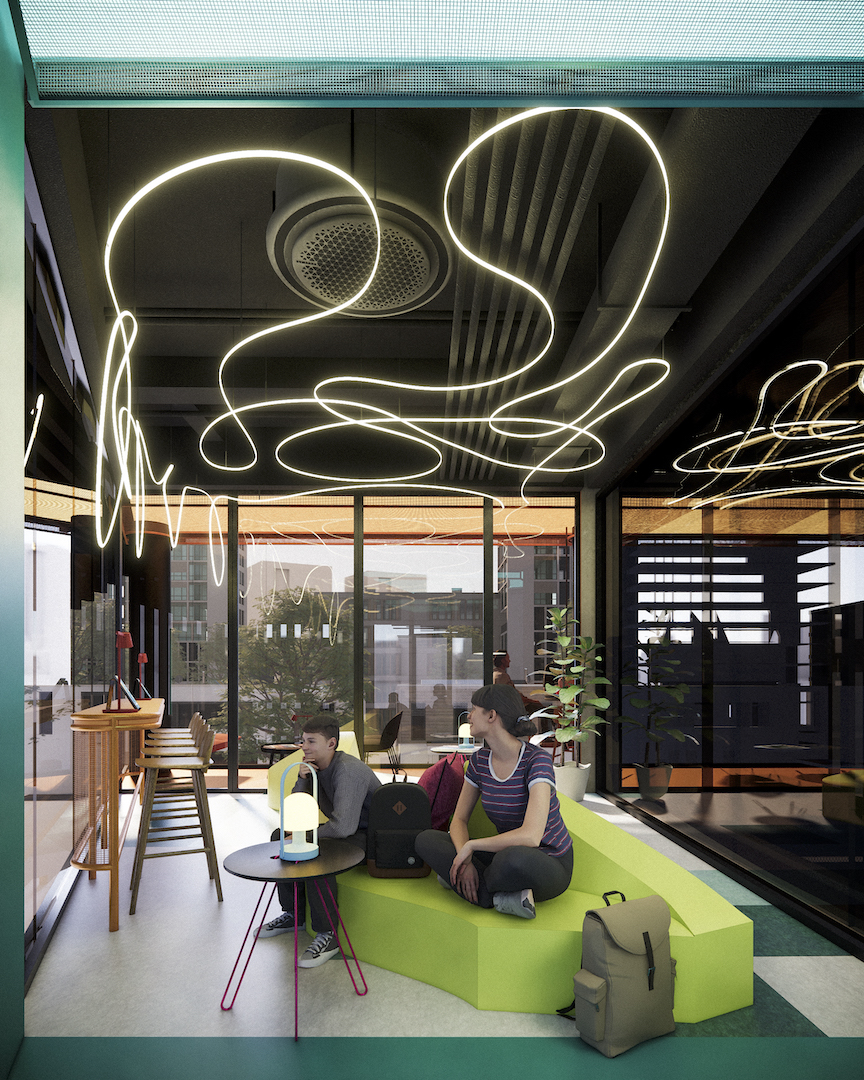
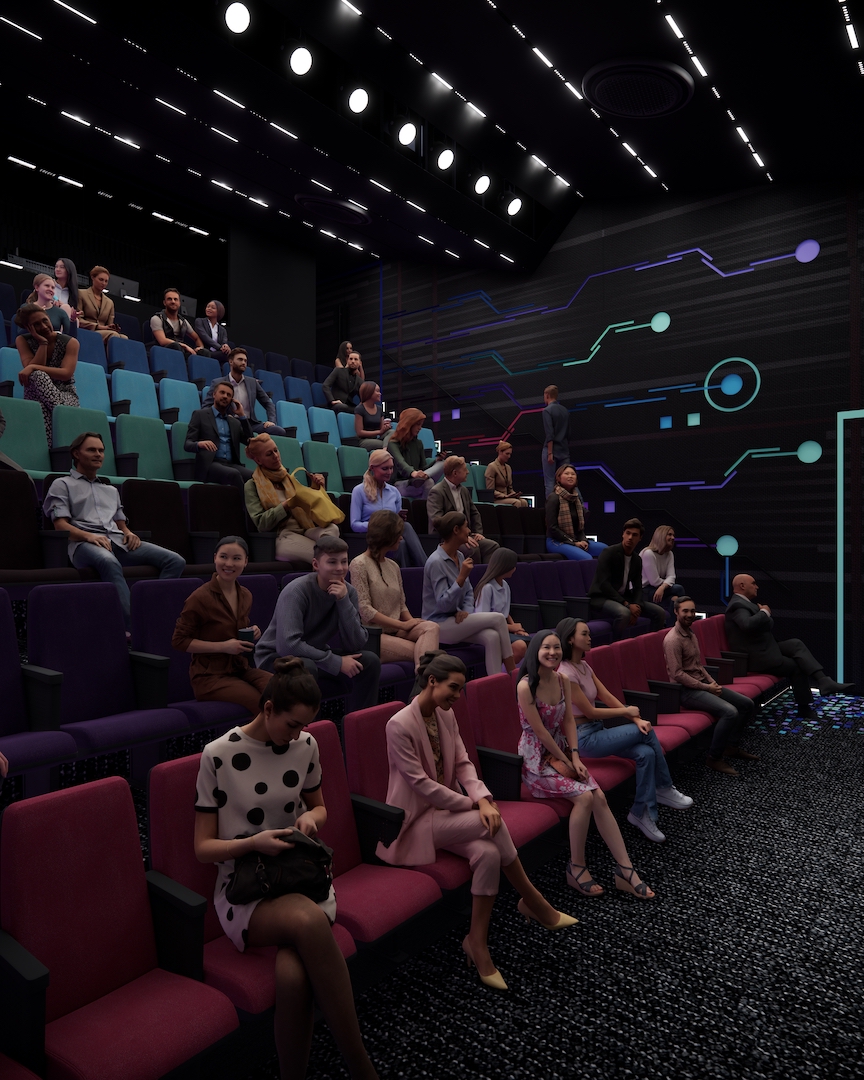
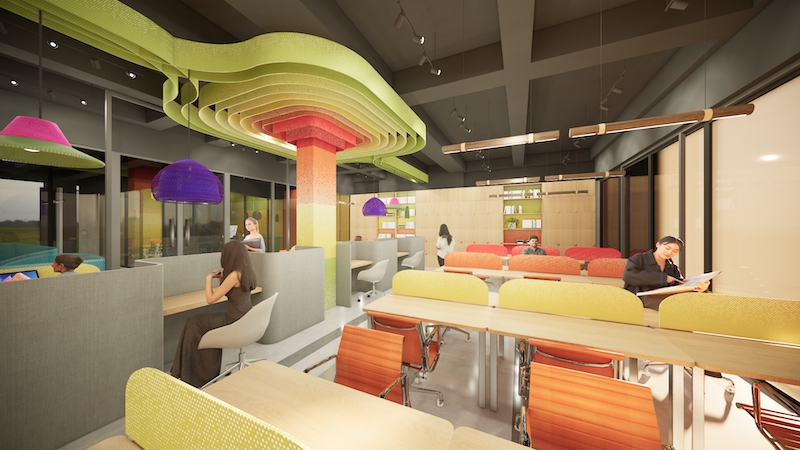
Higher up, this network of shared spaces expands into more specialized environments. The Auditorium serves as a venue for talks, screenings, presentations, and performances, while the Coworking Area and Library support focused study, shared work, and collaboration. Together, these spaces help shape the tower as a vertical campus where learning extends beyond formal instruction.
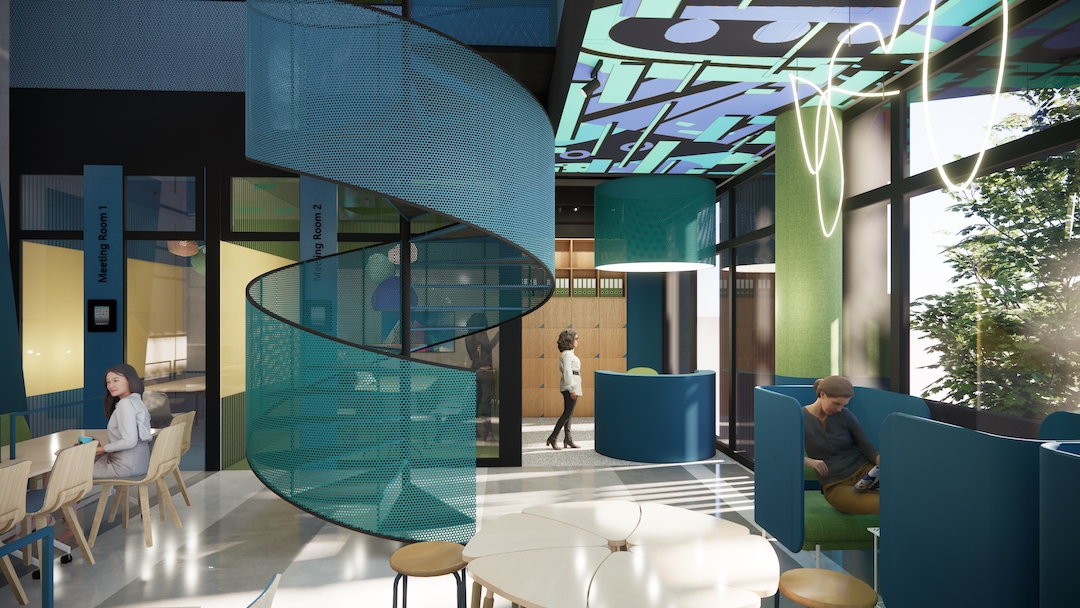

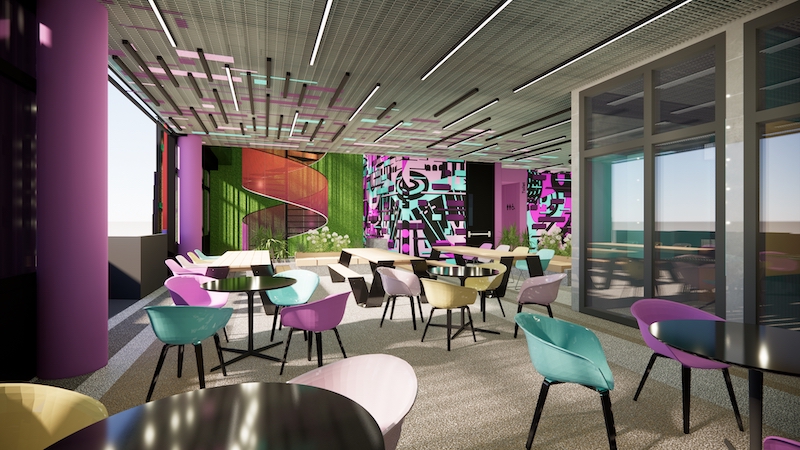
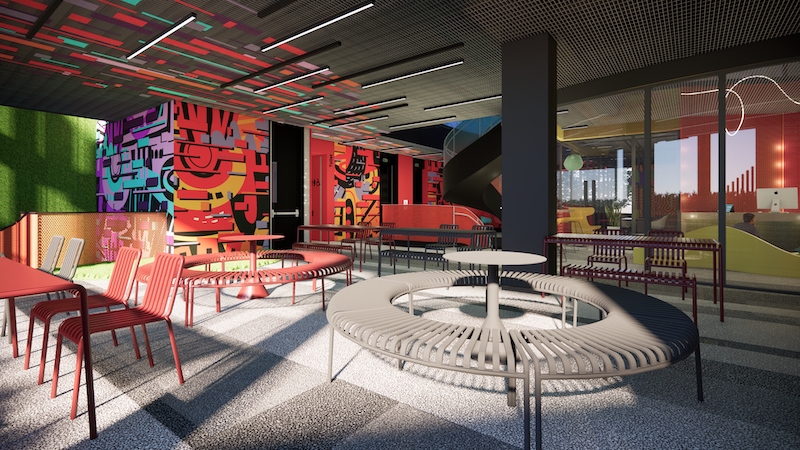
As a vertical campus, the tower organizes classrooms and learning spaces along the left and right sides of the plan, while shared open areas help structure student life in between. Vegetated skyparks at every level serve not only as circulation spaces, but also as social spaces—places where students meet, pause, and interact outside formal instruction.
A central atrium and staircase stitch these levels together vertically, drawing light deep into the building and encouraging visibility, mobility, and connection across floors. Rather than functioning as a stack of isolated rooms, the tower is imagined as a more open learning environment shaped by overlap between instruction, rest, movement, and informal exchange.
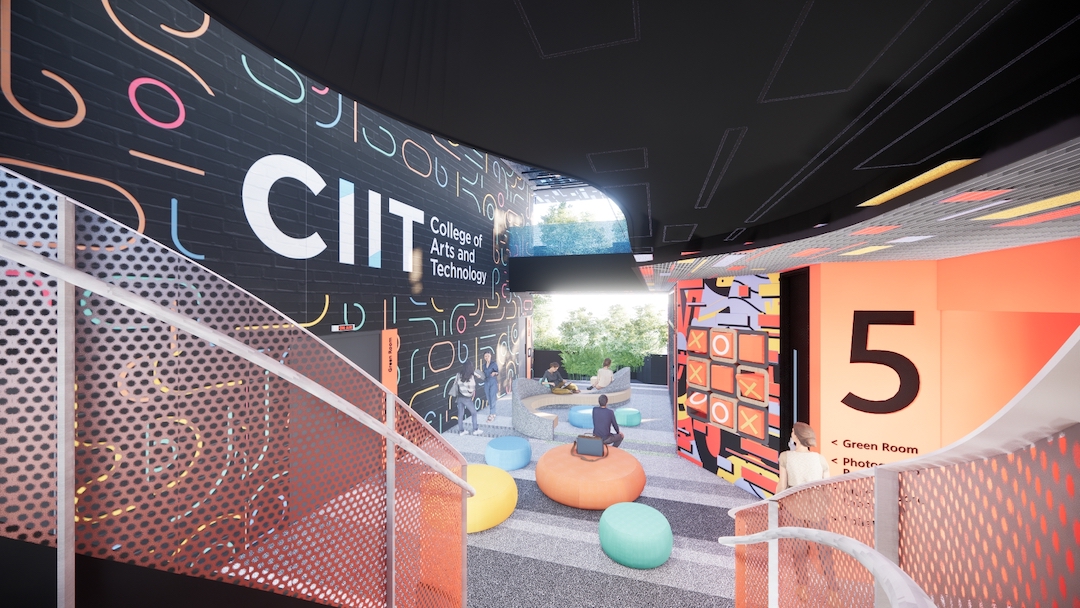
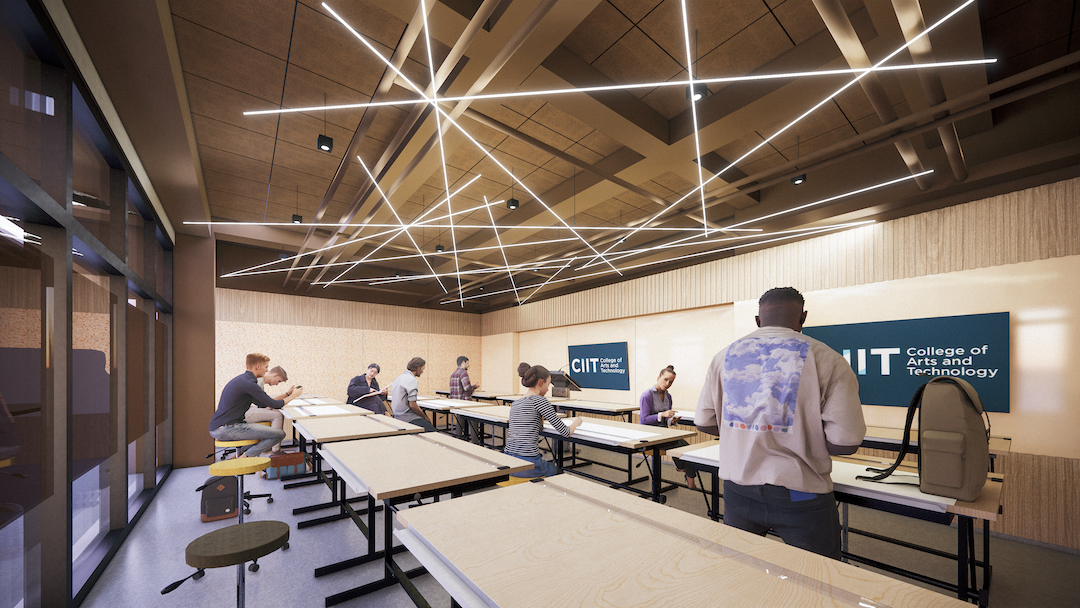
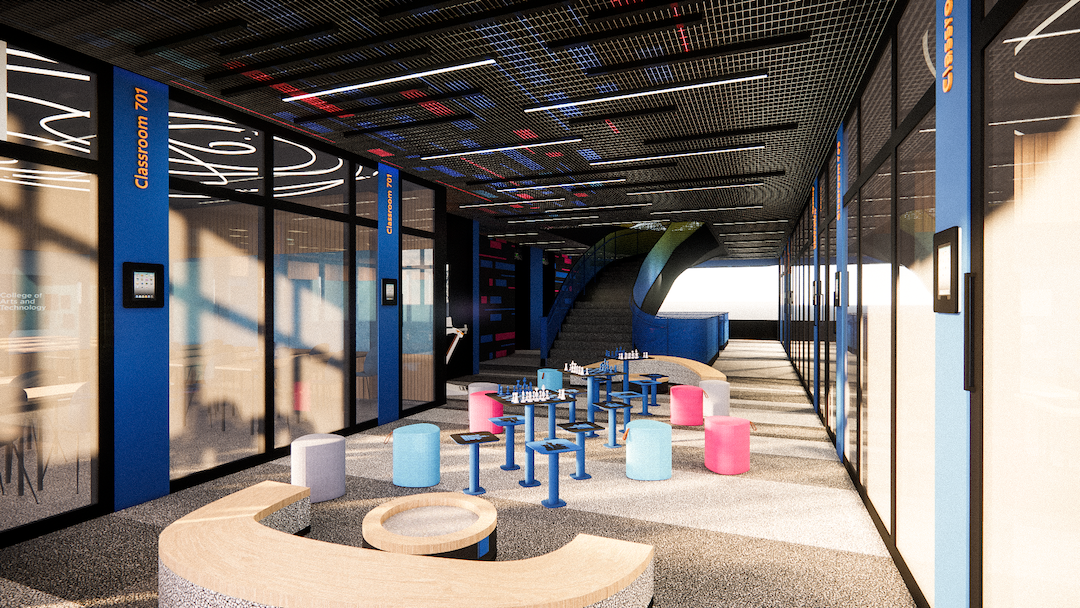
Classrooms are designed as flexible spaces for focused instruction, discussion, and creative work. Large glazed partitions keep them visually connected to the shared circulation areas, while widened corridors and adjacent breakout spaces extend learning beyond the room itself. Graphic lighting, bold color accents, and clear wayfinding give each level its own identity, reinforcing the tower’s role as a more open and interactive vertical campus.

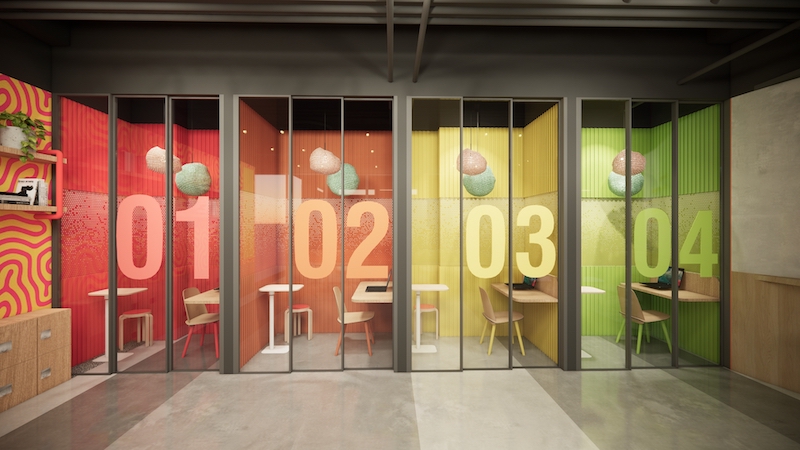
From the classroom floors upward, the tower takes on a quieter and more focused character. Gardens and open hallways bring light, air, and planting into the upper levels, while open faculty rooms support a more accessible and collaborative work environment. Online class booths provide private spaces for remote teaching and focused digital work, and boardrooms accommodate meetings and academic discussions. Together with the provision of unisex toilets, these floors support a more inclusive, flexible, and contemporary learning environment.
The Promise
Glitch Tower imagines a place of learning where mistakes are not erased, but given room to become something else.
For a school rooted in arts and technology, this means recognizing uncertainty, testing, and revision as necessary parts of growth. The project does not celebrate error for its own sake, but for what it makes possible: reflection, adaptation, and new ways of seeing.
As CIIT’s second tower, the building extends the identity of the campus while establishing a language of its own—one shaped not by seamless perfection, but by the productive potential of things going slightly off-course.
Project Team
Architecture / Interiors \
Jason Buensalido, Jerome Bautista, Rissa Espiritu, Rey Pascua, Vicky Pascual, Kayie Imbag, Aramis Corullo, Pia Silla, Ton Mataga, Pat Lomeda, Miel Aquino, Jose Concha
Collaborators
Structural \ DCH Reyes Structural Design Consultancy
MEPF \ Space Gruppo Design Consultancy


